
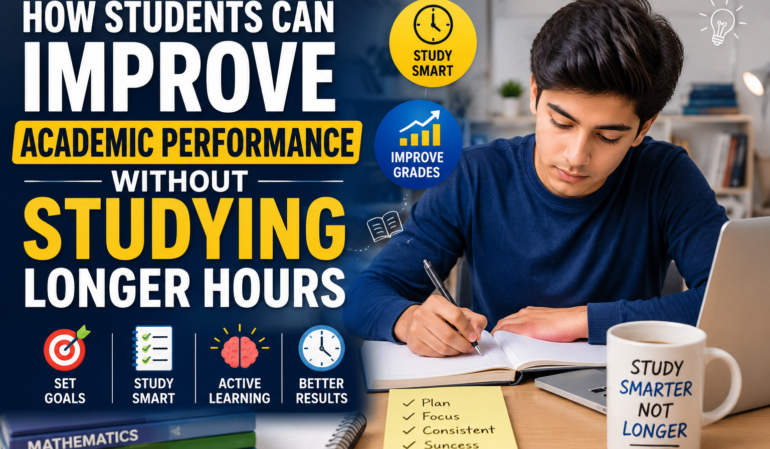
Many students believe that better grades require studying for longer hours. Although hard work is important, academic success is not simply about spending more time with books. Effective learning depends on how students study rather than how long they study.
Students across Pakistan and the Gulf often balance school responsibilities, extracurricular activities, family commitments, and personal interests. Finding additional hours for studying can therefore be challenging. Fortunately, there are proven strategies that help students improve academic performance without significantly increasing study time.
Understanding Smart Learning
Smart learning focuses on efficiency and effectiveness. Rather than spending countless hours reviewing material passively, students use techniques that maximize understanding, retention, and application.
Students who study strategically rather than excessively often achieve strong academic results.
Set Clear Academic Goals
Studying without specific objectives is one of the most common mistakes students make. Clear academic goals provide direction and help students focus on what matters most.
Examples of effective goals include:
- Improving mathematics grades by a specific percentage
- Completing assignments before deadlines
- Mastering a particular subject area
- Preparing effectively for upcoming examinations
Defined goals allow students to prioritize their efforts and avoid wasting time.
Create a Study Plan
A structured study schedule reduces stress and improves productivity. Students should divide their workload into manageable tasks and allocate time accordingly.
A well-organized study plan helps students:
- Stay consistent
- Avoid last-minute cramming
- Track progress
- Maintain a healthy balance between studies and personal activities
Consistency often produces better results than occasional long study sessions.
Focus on Active Learning
Many students spend hours reading textbooks without truly engaging with the material. Active learning techniques encourage deeper understanding and improve learning.
Effective methods include:
- Summarizing information in your own words
- Teaching concepts to someone else
- Creating mind maps
- Solving practice questions
- Participating in discussions
These techniques improve comprehension and memory retention.
Eliminate Distractions
Modern students face numerous distractions, especially from smartphones and social media platforms.
To improve concentration:
- Turn off unnecessary notifications
- Create a dedicated study space
- Use productivity techniques such as focused study intervals
- Set boundaries for social media usage during study sessions
Even small reductions in distractions can significantly increase productivity.
Develop Strong Note-Taking Skills
Well-organized notes help students review information more efficiently. Effective note-taking also encourages active engagement during lessons and improves understanding.
Students should focus on:
- Recording key concepts
- Highlighting important information
- Using diagrams and visual aids
- Organizing notes by topic
Good notes reduce the need for lengthy review sessions later.
Prioritize Understanding Over Memorization
Memorization may help students recall facts temporarily, but genuine understanding leads to long-term success.
Students should aim to understand:
- Why concepts work
- How ideas connect
- Real-world applications
- Problem-solving methods
When students understand the material, they can apply knowledge more effectively in examinations and practical situations.
Seek Help When Needed
Many students hesitate to ask for assistance and struggle unnecessarily. Seeking support from teachers, tutors, mentors, or classmates can save significant time and prevent learning gaps from growing.
Personalized tutoring can be especially beneficial because it provides targeted guidance tailored to the student’s needs.
Maintain a Healthy Lifestyle
Academic performance is closely linked to physical and mental well-being.
Students should prioritize:
- Adequate sleep
- Balanced nutrition
- Regular physical activity
- Stress management
A healthy body supports better concentration, memory, and overall learning capacity.
Practice Regular Revision
Instead of reviewing large amounts of material before examinations, students should revise consistently throughout the academic year.
Regular revision helps students:
- Strengthen memory
- Identify weak areas
- Reduce exam anxiety
- Improve long-term retention
Short, frequent review sessions are often more effective than lengthy cramming sessions.
Build Confidence Through Small Wins
Confidence plays a major role in academic success. Students who believe in their abilities are more likely to stay motivated and overcome challenges.
Celebrating small achievements, such as completing assignments on time or improving quiz scores, can boost confidence and encourage continued progress.
The Role of Personalized Tutoring
Personalized tutoring can accelerate academic improvement by identifying specific challenges and providing customized support.
A tutor can help students:
- Clarify difficult concepts
- Improve study techniques
- Develop better learning habits
- Stay accountable to their goals
This individualized approach often leads to more efficient learning and stronger academic outcomes.
Conclusion
Improving academic performance does not necessarily require studying for longer hours. Smart learning strategies, active engagement, effective planning, and consistent revision help students achieve better results while maintaining a healthy balance in their lives.